
FUTO Games
for FUTO
FUTO Games is a browser-based game room built around a sushi menu. It offers three games for two players: a memory game made of roll photos, a timed quiz that asks players to name a roll from its picture and ingredients, and Connect 4. There is no app to install. The shared TV, each player's tablet and the host's control panel are all the same web page, opened with a different role in the address.
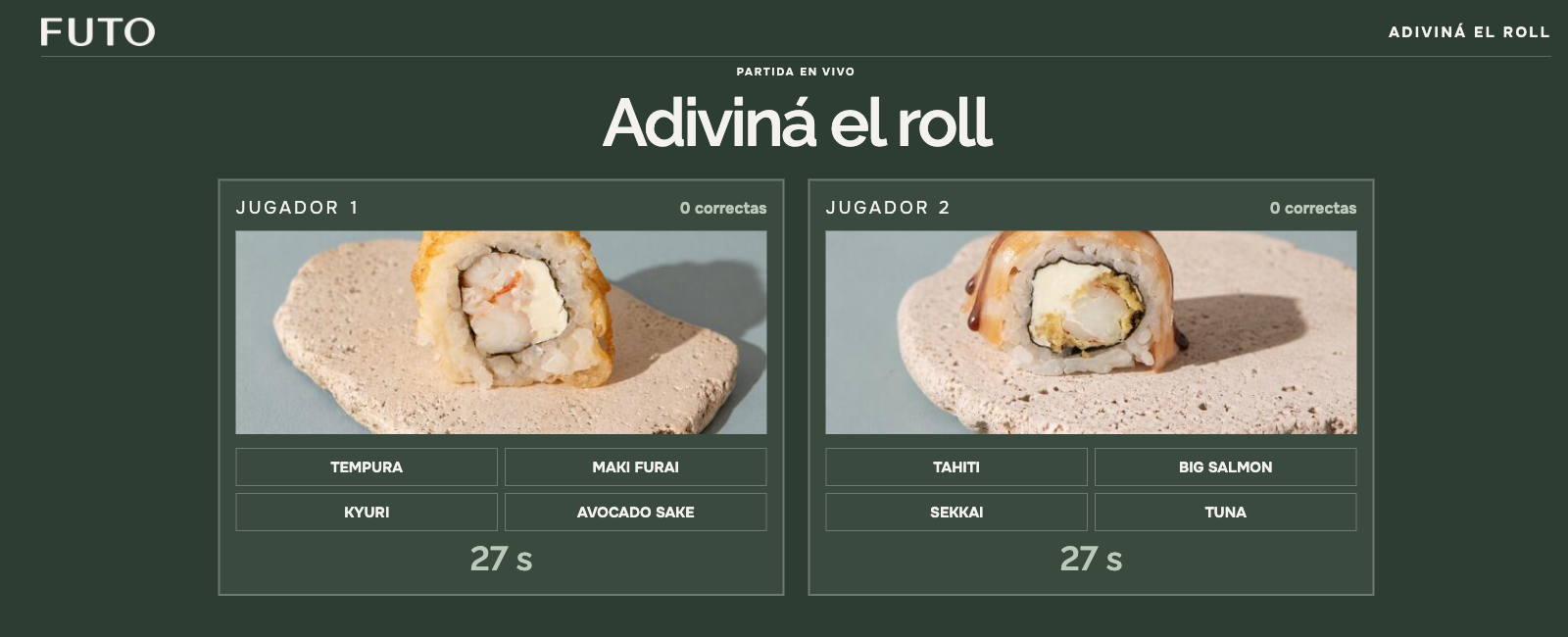
One server, four roles
The host opens the page without a role and gets the operator panel. From there, they choose a game and press start. The TV opens at /?role=screen, and the two tablets open at /?role=p1 and /?role=p2. The role is just a word in the URL, and it decides what that screen is allowed to show and do.
Behind the scenes, a single server process holds the entire game state in memory. Every device keeps a live connection open to the server and receives the full state after every move. The tablets send actions; the server checks whether the move is legal and whose turn it is, then sends the result to everyone. The TV never controls anything. It only draws what the server sends, which is why both players' boards can update at the same time.
There is no public release or installable app. The whole system is one process serving the page and acting as the referee.
Three games, three tempos
Memotest, the memory game, is a race. Each player gets a separate 20-card board made from ten rolls, and both boards are live at once. A match scores a pair. A mismatch stays visible for about 850 milliseconds before the cards turn back. Because the boards are independent, one player can finish while the other is still searching.
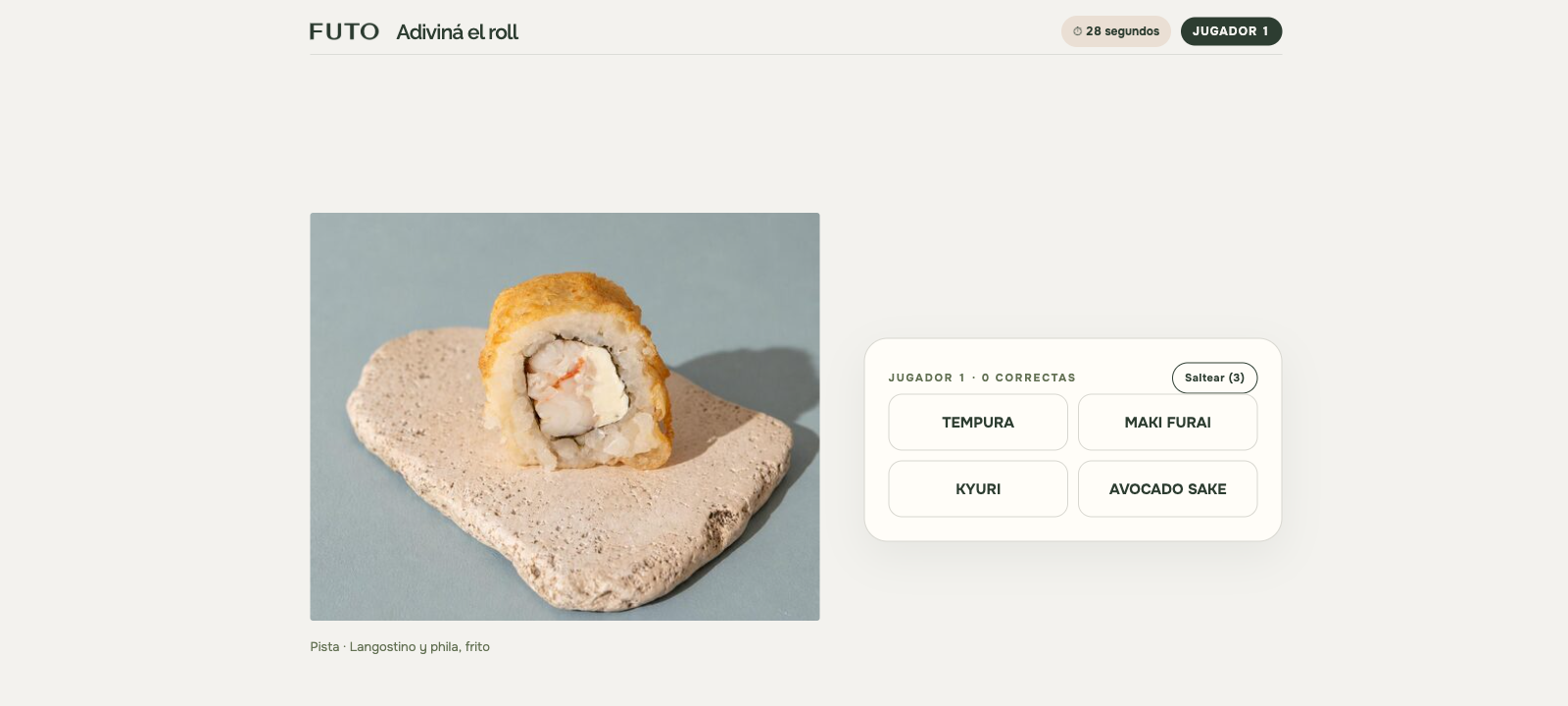
Adiviná el roll, or guess the roll, is a 30-second sprint. A roll appears with a short ingredient hint, and the player picks one of four names. A correct answer adds a point and moves to the next roll. A wrong answer costs five seconds and removes that option from the board. Each player gets three skips. When both timers run out, the higher score wins.
Connect 4 is the turn-based one. The server enforces alternating turns and gives each turn 15 seconds. If the clock expires, it does not pause or hand the move to the other player. It drops a random legal piece for the player who ran out of time, then passes the turn. The game keeps moving even when someone stops paying attention.
The menu is the game board
The content comes from FUTO's sushi menu: 44 rolls, each with a picture and a list of ingredients. The memory game draws ten pairs from that library, and the quiz uses the same photos, so a round doubles as a menu. The hints read like short menu descriptions, such as "Langostino y phila, frito" for Tempura, which describes langoustine and cream cheese, fried. A player who does not know the rolls can work from the ingredients. A regular can recognize the photo.
The interface is in Spanish, matching the menu. It is built for touch rather than for a desktop browser. Pinch zoom, the context menu and two-finger scrolling are disabled, and the layout uses large buttons and one clear task per screen. There are no accounts, no database and no saved profile to clear. The server's state is the only source of truth.
One practical detail is recovery. A tablet that loses its connection, or sits on a stale game state for seven seconds, reloads itself. A device that was asleep or carried out of Wi-Fi range comes back to the current round without anyone touching it.